Showing posts with label coated strings. Show all posts

Thursday, May 25, 2023

Taylor - XS


With immediate effect, all American Taylor guitars will be equipped with D'Addario's XS coated Phospor Bronxe strings. Not a coated strings fan but in this domain, I prefer D'Addario to Elixir. Mexican models will get the XS come Summer.

Pic: Taylor

Wednesday, July 15, 2020

Unworthy


Sometimes, I try my best to not judge a certain product based on a popular belief. I might be too nice at times & continue to give an already beaten reputation another chance. I believe this is that situation. 

There is this very popular string brand (let's call it Brand E) that offers a so called benchmark coating standard in preserving string life. Brand E might be the proverbial reference for those who believe in string coating technology & are not privy to any anomalies. Not me, of course. The coating somehow flakes off over time but that was an encounter of the electric kind. I decided to try the acoustic version & fingerpick all playing moments to eliminate the fact that the pick itself is the root of the issue. As seen above, despite the fingerpicking treatment, the flaking happened & exposed parts rusted pretty quickly. This is definitely my final obligation for Brand E. Good riddance.

Saturday, August 25, 2018

Treated belief


Before we begin, please be informed that a figure of 46 in the poll above is arguably not representative of the real guitarist/ bassist population out there who took time to participate. On that note, I thank those who took time to participate, much appreciated! This is a climate survey of sorts. Moving on...

Here's the beef- quite recently, someone talked to me about coated guitar strings being the way to go for the future. In terms of cost savings, less frequent string changes mean less expenditure set aside for expendables. Also, it does wonders for the environment as less frequent string change equals less metal being extracted to fulfil a certain need. Initially, the figures showed that there is a sizeable pool guitar/ bass players who embrace coated strings. However, towards the end of the poll period, the figures took a turn & that's the closing figures right there. We could agree that a difference of 2 is not as influential as we want it to be in terms of compelling statistics.


Let me share a personal observation when it comes to coated/ treated technology of guitar strings. Of course, some senior readers here might have come across more offerings along the way. If you could spare the time to share what came & went, I'd appreciate that very much. Please forgive the arrangement above, it's not chronological.

My first exposure to 'better' strings (in terms of durability) is GHS' Sub-Zero. At that point in time, the basis of comparison was a set of D'Addario which, in my opinion, is the epitome of immediate disintegration. So the Sub Zero was great indeed. Then someone recommended the DM Blue Steels which I thought wasn't that for off from the Sub Zero in terms of performance standards. They didn't last that significantly longer for me to totally ditch the Sub Zeros.

Years later, a good friend of mine asked me to check out the Black Diamonds (he used to be in this band called Stomping Ground). These feature coated technology instead of cryogenic treatments. I thought this made more sense because the coating wasn't part of the string material so the rate of preservation should be longer. The idea was good but the manifestation of intention was poor; the coating proved to be insular & stood very little chance against aggressive players who embrace stubborn, thick picks. The string coating over at the fret end did its job somewhat but we get bald patches at the picking end. Damn! Shortly thereafter, DR improved on this take & they proved to be popular for a while but the issue in hand wasn't put to rest, insular string protection is simply too feeble against stiff picks. 

The situation today
String preservation technology is currently in a fusion state. What Elixir & Cleartone (among others) are doing proved to be the combination of chemical & insular approaches. As it is, it's proving to be effective & convincing. Effective because strings do last longer compared to the non-treated ones. Convincing because players are buying the technology more than giving them up after the initial embrace.

Yay or nay?
So is the current string preservation technology a thumbs up/ down contribution to the industry? The technology works & it's not pretentious so players are investing good money to buy treated strings every time re-stringing is due. I know people who swear by Elixirs for example, they claim the strings last much longer & it's in terms of weeks. In the long run, we can say that if the situation holds, we would have less trash in the bin as guitar dweebs the world over buy lesser strings because theirs last longer. The main set back is of course price. You'd argue that the higher prices of treated strings would cancel out the need to buy more untreated strings but is chemical treatment the only factor that keeps your strings going? Are we really plain lazy when it comes to string cleaning considering there are products out there that help preserve string life? Ditto winding technology- are you aware that if the wound strings were done a little differently, it would trap less dirt/ moisture & affect string longevity (eg: Dean Markley Helix)?

There is also a case of tonal integrity. We have people out there telling us that while treated strings last, tone doesn't. I hear this coming from the Elixir camp not that Elixir is a failed product in this aspect (nothing personal against Elixir), people are coming forth to share their experiences & manufacturers should listen, especially from the acoustic camp where bona fide good tones coming directly from strings really matter.

Treated strings are not ready to drive their non-treated counterparts into extinction. Not yet. People are still buying non-treated strings because there's something about them that appease the tone mongers. This might be a purist take on the situation but strings started out without treatment to begin with & they worked, they still do. However, treatment technology is quickly establishing some standards in terms of performance delivery which should be of interest in today's world of limited resources. 

Saturday, June 9, 2018

Re-string Saturday: Orange


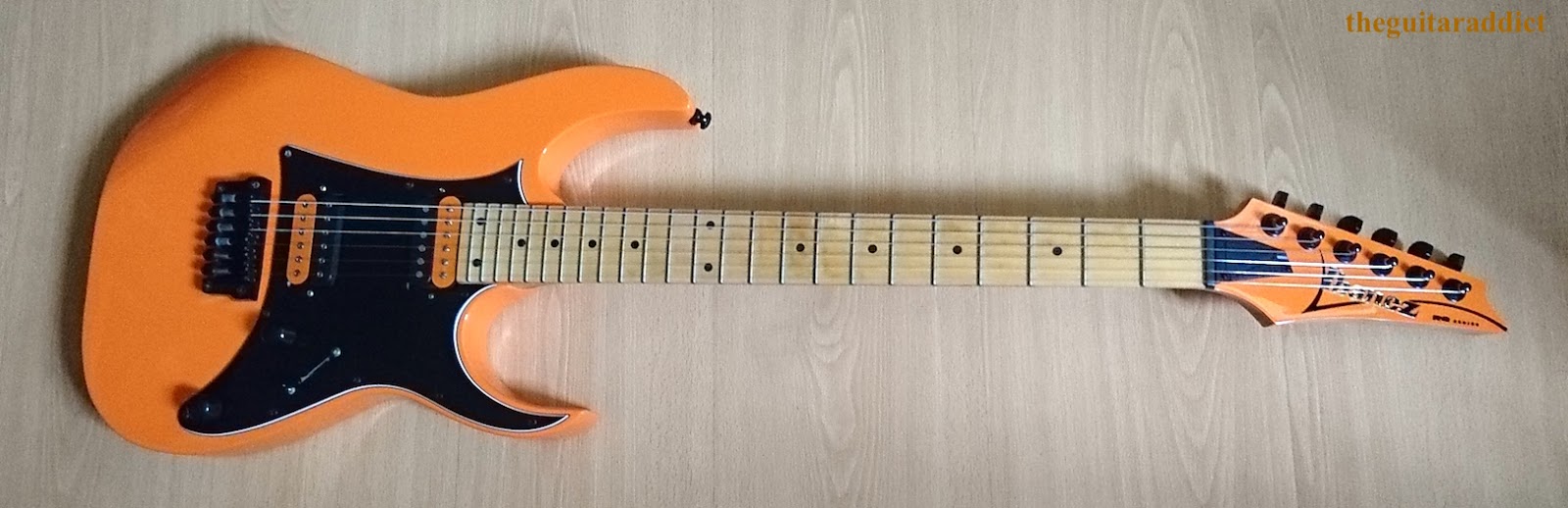
Wanted to hear some DiMarzios in action this morning so the Ibanez RG331M was it.


Slight make-over- orange strips...


But before the playing happened, a fresh set of strings- Dean Markley's coated set. Actually, I dislike the coated strings feel after my Elixir experience. So I thought, it might be the brand name, so giving this set a try.

Monday, December 9, 2013

Of coats... (strings content)

We're still on the topic of strings. The inevitable turn of issue, from that of string cleaning, is that of string resistance. Since we know & accept the fact that strings are expendables, are there any string types out there which are quasi-immortal? Perhaps the ones that would help us budget for string expenditure in the long run (because our pockets are not bottomless)?

We then enter the realm of coated strings, these are basically strings given a layered treatment to help prolong their good life. There are 2 types to note: 1) Colour coating 2) Chemical coating

I was first introduced to the colour coated set by my good friend brother Zachary Elias, the strings in question was the Black Diamond set (1). I avoided buying them despite knowing they were there at the shops on the assumption that they were not metal but they indeed are & the black coating is what rubber insulation does to electrical wires. I was visually impressed by his guitar back in his Stomping Ground days; his black strings seemed to disappear from a distance (together with a dark rosewood fretboard, that's what you get). So to the uninitiated, it's like the guy played a stringless guitar but what's that sound coming out at the end of the signal chain? Awesome! But having played them in person, the coating seems to flake off very easily over at the picking end, especially so when I use nothing else but thick, hard picks. Then came the second generation of colour coated wonder, most identified by the DR (2) brand (among others). In addition to a more durable coat, the manufacturer offered colours so that was like having psychedelia in your instrument. But those were still rather wimpy in terms of durability until the current NEONs (3) came along. This is what I'd recommend to those who are in need of string adventure as far as colour coating is concerned. In addition to the outright inclusion of colours, these treated pigmentation glows under UV light.

There is a camp of detractors in the midst of all this excitement who question the relevance of colour in string life preservation. This is compounded by the fact that we get peeved easily by the flaking coat & some players feel that the extra layer makes strings thicker than they should be, so why bother? Is there any less aesthetically inclined formula that really prolongs string life? Along came Elixir (5) who proved just that (there might be others out there but none was more mentioned compared to Elixir). Players who excrete excessive body fluid through their fingertips worship Elixir because they are corrosion tolerant without the layered shenanigans. The only down side to it was that Elixir strings were costly (a pack could easily buy you at least 3 packs of regular D'Addarios) but things are more affordable today, rest assured. There is also an emergence of coated string formula offered by various manufacturers, GHS (4) is one of them. I have virtually tried everything that came my way & they indeed proved to last longer than the typical, non-treated sets. My personal favourites are those offered by D'Addario & Cleartone but these days I'm not obliged to favour coated strings, I go with tone- I embrace strings which are honest to goodness; nothing too gimmick propelled, costly without proving true worth or too cumbersome to purchase. More importantly, they should sound inviting once they are in use.

As far as string coating is concerned, it affects the players in terms of feel & tone. Because we are humans with a different degree of sensitivity, some of us would feel this effect more than others. More importantly, do not impose unto others your philosophy of coated strings; it's one of the reasons why bands break up :-)

Saturday, November 16, 2013

Re-string at CCK: AO


This guitar belongs to a member of parliament here, I worked on it yesterday:

  • Fretboard treatment- cleaned + re-moisturized
  • Polished frets
  • Lubricated nut
  • Re-string

The brand- Alpha Omega. If you are of a certain age, you'll remember this brand, don't see it being sold here any more.


The guitar gives off a deep, warm tone. The body here looks big, almost concert-like.


Strings used- Ernie Ball Everlast, coated phosphor bronze\, a set of .011...

Friday, October 25, 2013

Re-string Friday: Ibanez RG370

This Ibanez RG370 belongs to my colleague, Mr. Khoo GV- re-string/ reconditioned fretboard/ lowered action. It's been a while since I handled colour-coated strings but I must say that the current generation of coated strings are more resilient than their predecessors.

Pic taken from FB Khoo G Vui

Tuesday, April 2, 2013

Coated deterioration

Do coated strings last forever? Here's proof that they do not. When you keep playing coated strings, the coating itself wears out & leaves the string exposed. This way, your strings are like ordinary, uncoated strings. The guitar you see above is my Ibanez S1XXV, the default green coated strings were worn out & rusty. In fact, the rust is threatening to eat into my frets. This is the reason why you shouldn't keep rusty strings in tact, replace them ASAP.

I've since replaced them with a fresh set of D'Addario steels & had no obligations to have another green set in there. The frets were all cleaned up too.

Sunday, April 24, 2011

Re-string weekend: Jackson DK2T

I've been playing my Jackson DK2T for the last couple of days & the default strings finally gave way to grime & rust. I bought a pack of GHS Infinity Steel ($9.30) from the good people at TY Music; I'm a fan of steels lately for their inherent brightness. Friends reminded me of their abrasive property but I'm not too concerned with that as I employ minimal string bending. Don't squint your eyes because the wound strings you see there are indeed black- the Infinity Steel features black coating for the wound trio in this .009 set. The coating here feels much thinner than DR's Neons but let's give them some time to prove their durability.

Saturday, May 15, 2010

Coated explorer

Dora the explorer discovers GHS strings do come in the coated version as well.

Saturday, May 8, 2010

How many strings...?

At any one time in the house, I actually have 237 strings in my guitars. Yikes... !

Sunday, November 8, 2009

Flake off

One of the set backs of coated strings is that it flakes off readily at the picking area as depicted above (Guitar: my Ibanez RGR08). Some of us think this is 'bad' but it's expected isn't it? You aren't actually fingering your strings at that area, the pick proves to be a hard material which comes into contact with the coated material & naturally, flaking off occurs. However, we must be objective & remember the role of this coating; to preserve string life more so at the fretted area rather than the picking vicinity.

Of course, some of us just can't stand how this looks...

Wednesday, August 12, 2009

Yellow + red

Stop rubbing your eyes. Yes, those are red & yellow strings in my Ibanez RGR08. I have some boxes of coated DR strings at home- wonder if a combination of colours in the same guitar would make me play better. Hmm...